2026.05.01 (금) 19:54




 닫기
닫기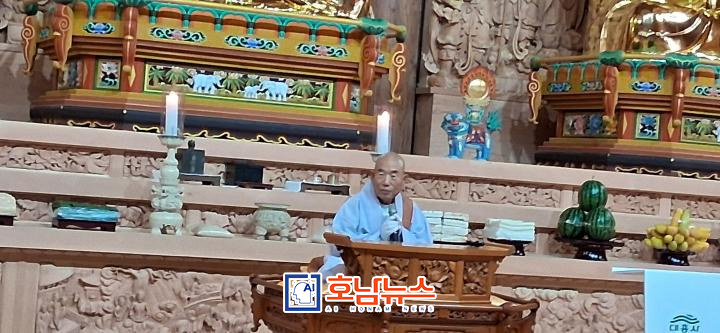 대흥사 마니보탑 부처님진사리 봉안법회 / 사진제공=박충배 논설 |
유네스코 세계문화유산으로 지정된 대흥사에서 부처님 진신사리 봉안을 중심으로 한 뜻깊은 법회가 봉행되며 불교 수행과 호국정신의 의미를 다시 한 번 되새기는 계기가 마련됐다.
이번 법회는 대흥사 여의주봉에 조성된 마니보탑에 부처님 진신사리를 봉안하는 자리로, 오랜 수행과 기도의 결실을 상징하는 동시에 불법(佛法)의 영속성과 중생 구제의 서원을 담아낸 의식으로 평가된다.
전국 각 지역에서 참석하신 스님과 신도들이 약 200여 명이 참석한 가운데 호국대전에서 법회를 마치고 마니보궁탑 자리로 이동하여 진신사리를 봉안하는 행사로 성대하게 봉행되었다.
법문은 조실 보선 큰스님의 말씀을 대신해, 천일기도를 열 차례 회향한 선관스님의 수행과 법문 정신으로 가름됐다.
선관스님의 만일기도 회향은 수행자의 정진과 원력이 어떻게 공동체의 신행으로 확장되는지를 보여주는 상징적 사례로 받아들여지고 있다.
불교에서 사리는 크게 두 가지로 구분된다.
하나는 화장 후 남는 유골 형태의 사리이며, 다른 하나는 수행과 공덕으로 인해 생성되는 보석처럼 빛나는 사리다.
일반적으로는 뼈에서 생성된 사리를 의미하지만, 그 본질은 수행의 깊이를 상징하는 영적 결실에 있다.
마니보탑의 ‘마니’는 여의주이자 보배를 뜻하며, 세계가 소멸하더라도 영원히 남는 진리를 상징한다.
이는 곧 다음 생에 부처로 재현된다는 불교적 의미를 내포하고 있으며, ‘보탑’은 그러한 진리를 봉안한 전각으로서의 역할을 갖는다.
이날 법회에서는 향후 전각 건립 계획과 함께 호국대전 내·외부 단청 불사 추진 의지도 함께 밝혀졌다.
‘삼재불입지처(三災不入之處)’의 의미처럼, 불법이 깃든 공간은 모든 재난을 물리치고 중생을 제도하는 도량이 되어야 한다는 점도 강조됐다.
법상 주지스님은 “조실스님께 깊이 감사드리며, 지혜와 복덕이 부족한 중생도 정진 수행을 통해 참선의 세계에 들어갈 수 있다.”고 말하고 “불자들의 시주와 정성이야말로 가장 수승한 공덕”이라고 밝혔다.
또한 “선관스님의 만일기도 회향을 진심으로 축하하며, 어른스님들과 기도 대중의 공덕 덕분에 주지 소임을 다할 수 있었다.”고 덧붙였다. 이어 30년 동안 이어진 화향법회 신도들의 공덕이 원만히 구족되기를 기원했다.
특히 도갑사 미륵전에서 이어진 천일기도 열 번의 회향 법회 법문을 하여 주신 선관스님은 “좋지 않은 인연도 수행을 통해 풀어내면 결국 좋은 인연으로 전환된다.”고 강조했다.
불교에서 말하는 가피는 몽중가피, 명훈가피, 현실가피로 나뉘며, 이는 수행자의 삶 속에서 다양한 형태로 드러난다고 하셨다.
법회에서는 “시시때때로 신심을 내고 수행에 정진할 때, 부처님의 가피가 가랑비처럼 스며들어 결국 행복한 삶으로 이어진다.”는 메시지도 전해주셨다.
이번 대흥사 마니보탑 진신사리 봉안 법회는 단순한 의식을 넘어, 수행과 공덕, 공동체 신행, 그리고 호국불교의 정신을 아우르는 종합적 불교 문화행사로 자리매김하고 있다.
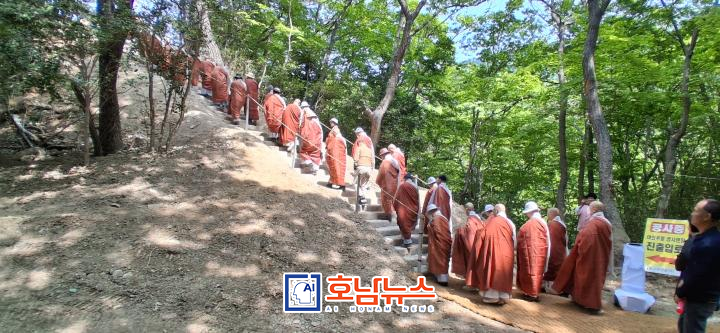 대흥사 마니보탑 부처님진사리 봉안법회 / 사진제공=박충배 논설 |
【Jeonnam·Gwangju = AI Honam News】 aihnnews@kakao.com
“A Millennium of Prayer Blossoms into Sacred Relics”… Daeheungsa Hosts Mani Pagoda Enshrinement Ceremony
Subheadline: Completion of Seongwan Monk’s 10,000-Day Prayer Upholds Spirit of Patriotic Buddhism… “The Path to Saving All Beings Opens Through Buddha’s Grace.”
A meaningful Buddhist ceremony centered on the enshrinement of the Buddha’s sacred relics was solemnly held at Daeheungsa Temple, a UNESCO World Heritage site, offering an opportunity to once again reflect on the essence of Buddhist practice and the spirit of patriotic Buddhism.
The ceremony marked the enshrinement of the Buddha’s sacred relics in the Mani Pagoda constructed on Yeouiju Peak within the temple grounds. It symbolizes the culmination of long-standing devotion and prayer, while embodying the perpetuity of the Dharma and the vow to liberate all sentient beings.
Approximately 200 monks and lay followers from across the country attended the event. After completing the main Dharma assembly at the Hall of National Protection, participants moved to the Mani Pagoda site, where the enshrinement of the sacred relics was conducted in a grand and solemn manner.
The Dharma message was conveyed in the spirit of Venerable Seongwan, who completed ten cycles of 1,000-day prayer practices, in place of a direct sermon by the senior monk, Venerable Boseon. Seongwan’s completion of a 10,000-day prayer is regarded as a symbolic example of how an individual’s dedication and spiritual resolve can expand into a collective religious practice.
In Buddhism, relics (sarira) are generally classified into two types: one refers to the physical remains left after cremation, while the other consists of jewel-like relics formed through deep practice and accumulated merit. Although commonly associated with bone fragments, their true essence lies in representing the profound spiritual attainment of the practitioner.
The term “Mani” in Mani Pagoda means a wish-fulfilling jewel or treasure, symbolizing an eternal truth that remains even if the world disappears. It also implies rebirth as a Buddha in the next life. The pagoda itself serves as a sacred structure that enshrines this truth.
During the ceremony, future plans for constructing additional temple halls were announced, along with the intention to carry out dancheong (traditional decorative painting) restoration on both the interior and exterior of the Hall of National Protection. Emphasizing the concept of “a place where the three calamities cannot enter,” it was highlighted that a space imbued with the Dharma must serve as a sanctuary that protects against disasters and guides all beings toward liberation.
The abbot, Venerable Beopsang, expressed deep gratitude to the senior monks, stating, “Even beings lacking wisdom and merit can enter the world of meditation through diligent practice,” and added that “the offerings and devotion of Buddhist followers are the most supreme forms of merit.”
He also congratulated Venerable Seongwan on the completion of the 10,000-day prayer, noting that he could fulfill his duties as abbot thanks to the virtue and dedication of the elder monks and the prayer community. He further prayed that the accumulated merit of devotees who have participated in devotional assemblies for the past 30 years would be fully realized.
In particular, during the Dharma talk delivered at the dedication ceremony linked to ten cycles of 1,000-day prayers at Mireukjeon Hall of Dogapsa Temple, Venerable Seongwan emphasized that “even unfavorable karmic ties can ultimately be transformed into positive ones through spiritual practice.”
Buddhist grace (Gapi) is categorized into three forms—grace experienced in dreams, unseen spiritual guidance, and grace manifested in reality—appearing in various ways throughout a practitioner’s life.
The ceremony conveyed the message that “when one continually cultivates faith and engages in diligent practice, the Buddha’s grace permeates like gentle rain, ultimately leading to a life of true happiness.”
This enshrinement ceremony of the Buddha’s sacred relics at the Mani Pagoda of Daeheungsa goes beyond a simple ritual, emerging as a comprehensive Buddhist cultural event encompassing spiritual practice, merit, communal devotion, and the enduring spirit of patriotic Buddhism.
 ai호남뉴스 박충배 편집/칼럼/논설 aihnnewsr@kakao.com