| “4·19는 과거가 아니라 현재다… 민주주의는 지금 우리의 선택에 달려 있다” ai호남뉴스 박충배 편집/칼럼/논설 aihnnewsr@kakao.com |
| 2026년 04월 19일(일) 13:49 |
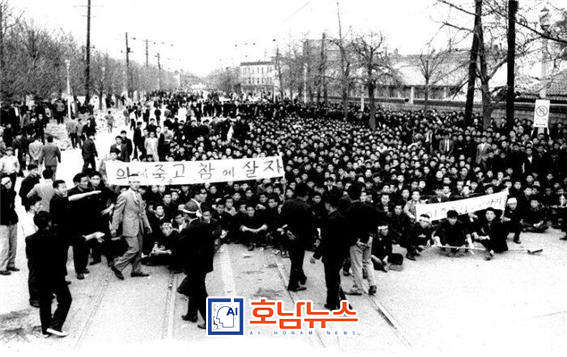 4.19 혁명 시민과 학생 / 사진제공=chat gpt |
【전남=AI호남뉴스】 aihnnews@kakao.com
1960년 4월, 대한민국의 역사는 시민의 힘으로 다시 쓰였다.
부정선거와 권위주의 통치에 맞서 거리로 나선 학생과 시민들은 스스로 민주주의의 주체임을 증명했고, 이는 4·19혁명이라는 이름으로 기록됐다. 그러나 4·19는 단순한 역사적 사건이 아니라, 지금도 계속되는 질문이자 과제다.
대한민국 현대사의 흐름은 단절이 아니라 이어진 구조 속에서 이해되어야 한다.
국가 형성 초기의 비극으로 남은 제주 4·3 사건은 권위주의적 통치와 국가폭력의 출발점이었고, 그 억압의 축적은 결국 4·19혁명이라는 대중적 저항으로 분출됐다.
그러나 혁명 이후에도 민주주의는 곧바로 정착되지 못했다.
5·16 군사정변과 12·12 군사반란으로 이어진 군사 쿠데타는 다시 권력을 총칼로 장악하는 구조를 만들었고, 이는 국민의 기본권을 억압하는 체제로 이어졌다.
그 정점에서 발생한 5·18 민주화운동은 국가가 국민을 향해 폭력을 행사한 가장 참혹한 사례로 남아 있다.
그러나 역사는 거기서 멈추지 않았다.
국민은 다시 거리로 나섰고, 6월 민주항쟁을 통해 대통령 직선제를 쟁취하며 민주주의를 스스로 회복해냈다.
이처럼 대한민국의 민주주의는 위로부터 주어진 것이 아니라 아래로부터 쟁취된 역사다.
문제는 이러한 역사적 경험에도 불구하고, 과거 권위주의 체제와 연결된 정치적 흐름에 대한 충분한 성찰과 책임이 지금까지도 명확하게 이루어지고 있는가 하는 점이다.
민주주의는 단순히 제도만으로 유지되지 않는다.
제도를 운영하는 정치세력과 이를 감시하는 시민의 의식이 함께 작동할 때 비로소 살아 있는 체제가 된다.
지금 우리 사회가 직면한 가장 큰 위험은 노골적인 독재의 부활이 아니라, 민주주의의 후퇴를 감지하지 못하는 무관심이다.
시민이 정치에서 한 걸음 물러나는 순간, 권력은 스스로를 견제할 장치를 잃고 비대해진다.
침묵은 중립이 아니라, 결과적으로 권력의 편에 서는 행위가 될 수밖에 없다.
4·19혁명은 단지 기념일로 소비되어서는 안 된다.
그것은 끊임없이 현재를 향해 질문을 던지는 살아 있는 역사다.
우리는 그 질문 앞에서 자유로울 수 없다.
민주주의는 완성된 상태가 아니라 지속적으로 지켜내야 할 과정이며, 그 책임은 특정 집단이 아니라 모든 시민에게 있다.
따라서 지금 필요한 것은 과거를 단순히 기억하는 것을 넘어, 그 의미를 현재의 삶 속에서 실천하는 일이다.
역사에 대한 올바른 인식은 왜곡을 막는 출발점이며, 정치에 대한 감시와 참여는 민주주의를 유지하는 최소한의 조건이다.
또한 표현의 자유와 인권, 법치라는 기본 가치들을 일상 속에서 지켜내려는 노력이 병행될 때 민주주의는 비로소 지속될 수 있다.
대한민국의 민주주의는 수많은 희생 위에 세워졌다. 그리고 그 역사는 분명히 말하고 있다. 국민이 행동하면 변화는 가능하지만, 국민이 침묵하면 역사는 언제든 후퇴할 수 있다는 사실이다.
4·19는 끝난 혁명이 아니다.
그것은 지금 이 순간에도 계속되고 있는 선택의 문제다.
우리는 시민으로서 책임을 다할 것인가, 아니면 방관자로 남을 것인가. 이 질문에 대한 답이 곧 대한민국 민주주의의 미래를 결정하게 될 것이다.
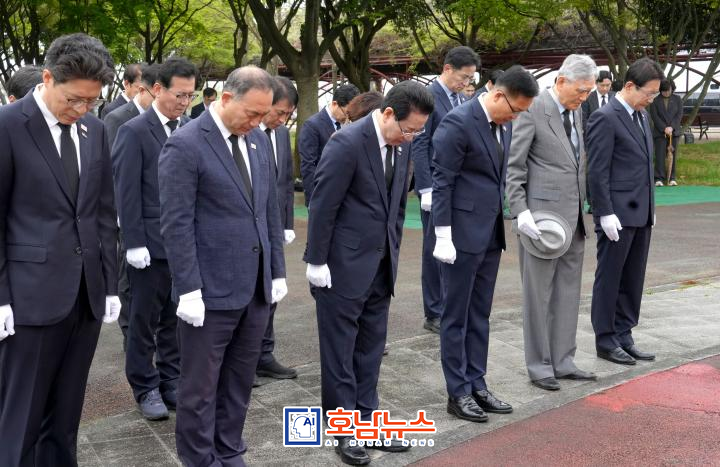 4·19혁명 제66주년 기념 참배 / 사진제공=전라남도 |
【Editorial】
【Jeonnam = AI Honam News】 aihnnews@kakao.com
“April 19 Is Not the Past… Democracy Depends on Our Choices Today”
In April 1960, the course of South Korean history was rewritten by the power of its citizens.
Students and ordinary people who took to the streets against election fraud and authoritarian rule proved that they themselves were the true agents of democracy. This moment has been recorded in history as the April 19 Revolution. Yet April 19 is not merely a historical event—it remains an ongoing question and an unfinished task.
The trajectory of modern Korean history must be understood not as a series of disconnected events, but as a continuous structure.
The tragedy of the Jeju 4.3 Incident marked the beginning of authoritarian rule and state violence in the early years of nation-building. The accumulation of such repression ultimately erupted into the mass resistance of the April 19 Revolution. However, democracy did not immediately take root after that uprising.
The May 16 Military Coup and the December 12 Coup reestablished a system in which power was seized through military force, leading to the suppression of fundamental civil rights. At its most tragic extreme, the Gwangju Uprising stands as a stark example of the state turning violence against its own citizens.
Yet history did not end there.
The people rose once again, and through the June Democratic Struggle, they reclaimed the right to directly elect their president. In this sense, South Korea’s democracy was not granted from above, but won from below through the persistent struggle of its people.
The question now is whether sufficient reflection and accountability have truly been achieved regarding the political forces historically connected to authoritarian rule. Democracy is not sustained by institutions alone. It remains alive only when those who wield power are held accountable by a vigilant and engaged citizenry.
The greatest danger facing our society today is not the overt return of dictatorship, but the quiet erosion of democracy through indifference. When citizens step back from political participation, power loses its restraints and inevitably expands unchecked. Silence is not neutrality; it ultimately becomes complicity with power.
The April 19 Revolution must not be reduced to a ceremonial commemoration. It is a living history that continually challenges the present. We cannot evade the questions it raises. Democracy is not a completed state, but an ongoing process that must be defended, and that responsibility belongs to every citizen.
What is required now is not merely remembering the past, but practicing its meaning in our daily lives. A proper understanding of history is the starting point for preventing distortion, while active participation and oversight in politics are the minimum conditions for sustaining democracy. Furthermore, efforts to uphold fundamental values—freedom of expression, human rights, and the rule of law—must be carried out consistently in everyday life.
South Korea’s democracy was built upon countless sacrifices. And history clearly teaches us this: when the people act, change is possible; when the people remain silent, history can always regress.
April 19 is not a finished revolution.
It is a question of choice that continues even at this very moment.
Will we fulfill our responsibilities as citizens, or remain as bystanders?
The answer to this question will determine the future of democracy in South Korea.
 ai호남뉴스 박충배 편집/칼럼/논설 aihnnewsr@kakao.com